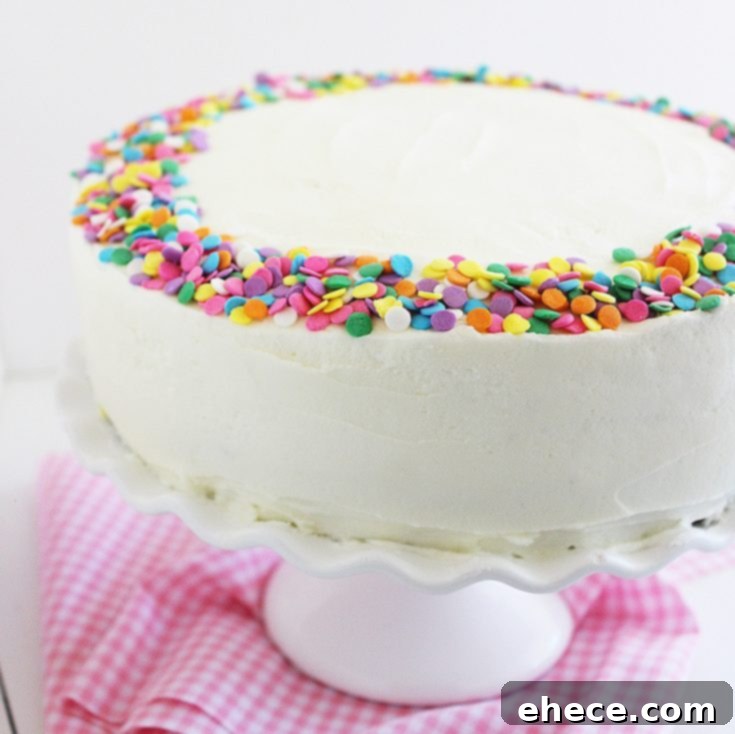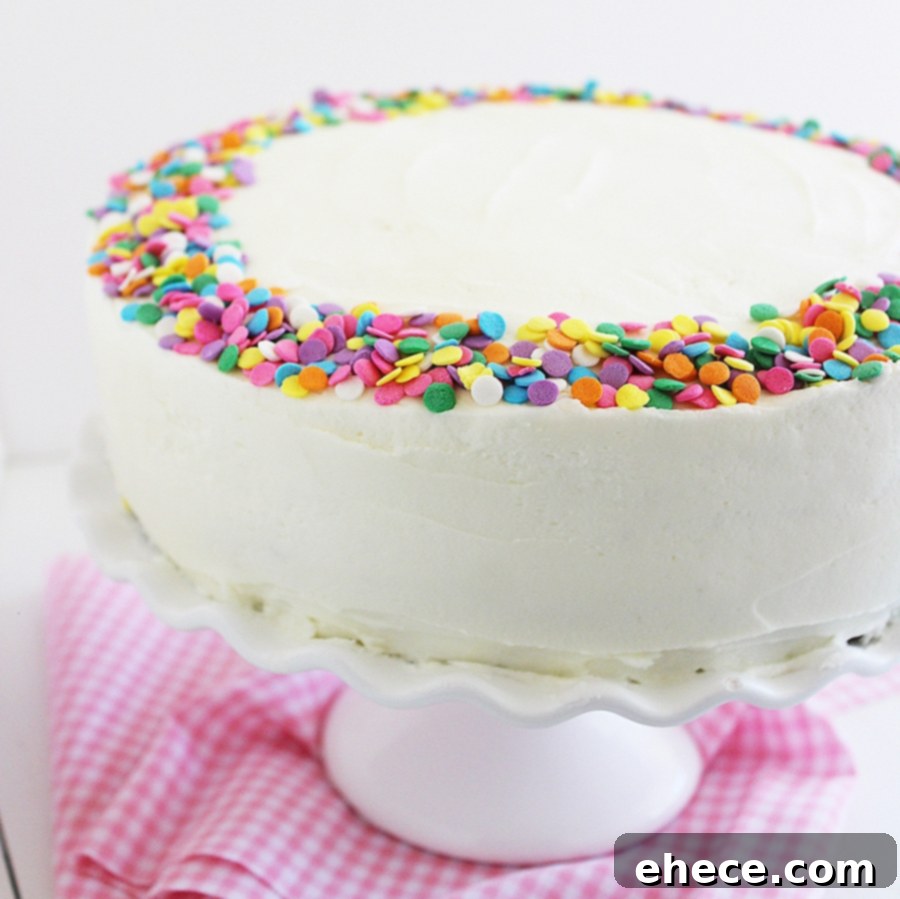
Celebrate life’s precious moments with a homemade yellow cake so soft, fluffy, and utterly delicious, you won’t believe it came from your own kitchen. Covered in rich vanilla frosting and a cascade of colorful sprinkles, this isn’t just a cake; it’s an experience. Prepare to bake the best cake you’ve ever tasted – you simply have to try it to believe its magic!
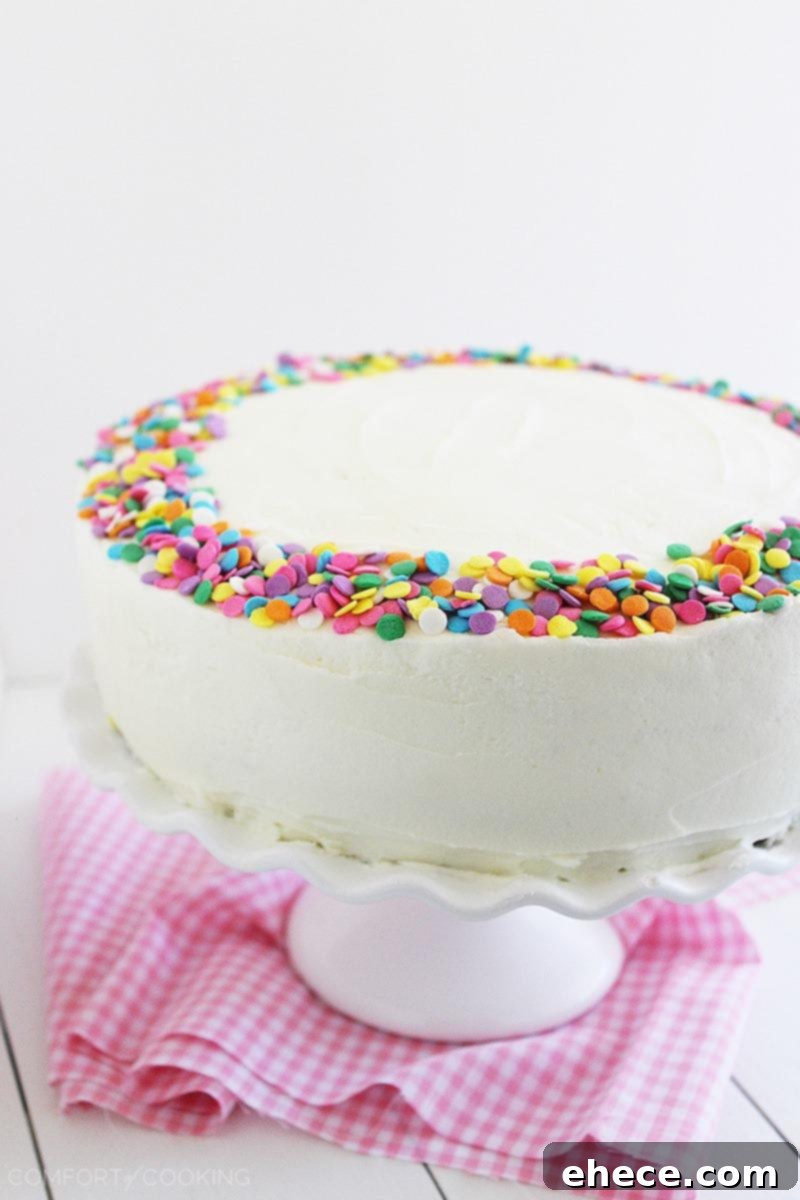
The Quest for the Perfect Homemade Yellow Cake
For many years, the very thought of baking a magnificent, Instagram-worthy layer cake seemed like an insurmountable challenge. The art of balancing flavor with flawless presentation always felt just out of reach. More often than not, my culinary efforts would yield a cake that was undeniably delicious and wonderfully fluffy, yet visually, it left much to be desired. I’ve faced my share of baking disasters: cakes with disappointingly sunken centers, frostings that inexplicably curdled, and slices so structurally unsound that even the most generous shower of sprinkles couldn’t mask their imperfections. To put it mildly, my past attempts at crafting a beautiful layer cake were, shall we say, a bit pitiful.
However, life has a way of presenting new motivations. With the joyous anticipation of our baby-to-be’s upcoming birthday, a fresh challenge beckoned. While welcoming a new life into the world undoubtedly stands as the most intimidating, yet exciting, endeavor I’ve ever faced, mastering the art of cake baking runs a surprisingly close second. This month, I find myself embracing both monumental tasks, eager to conquer fears and create something truly special.
But before all else, there was the cake. Her cake.
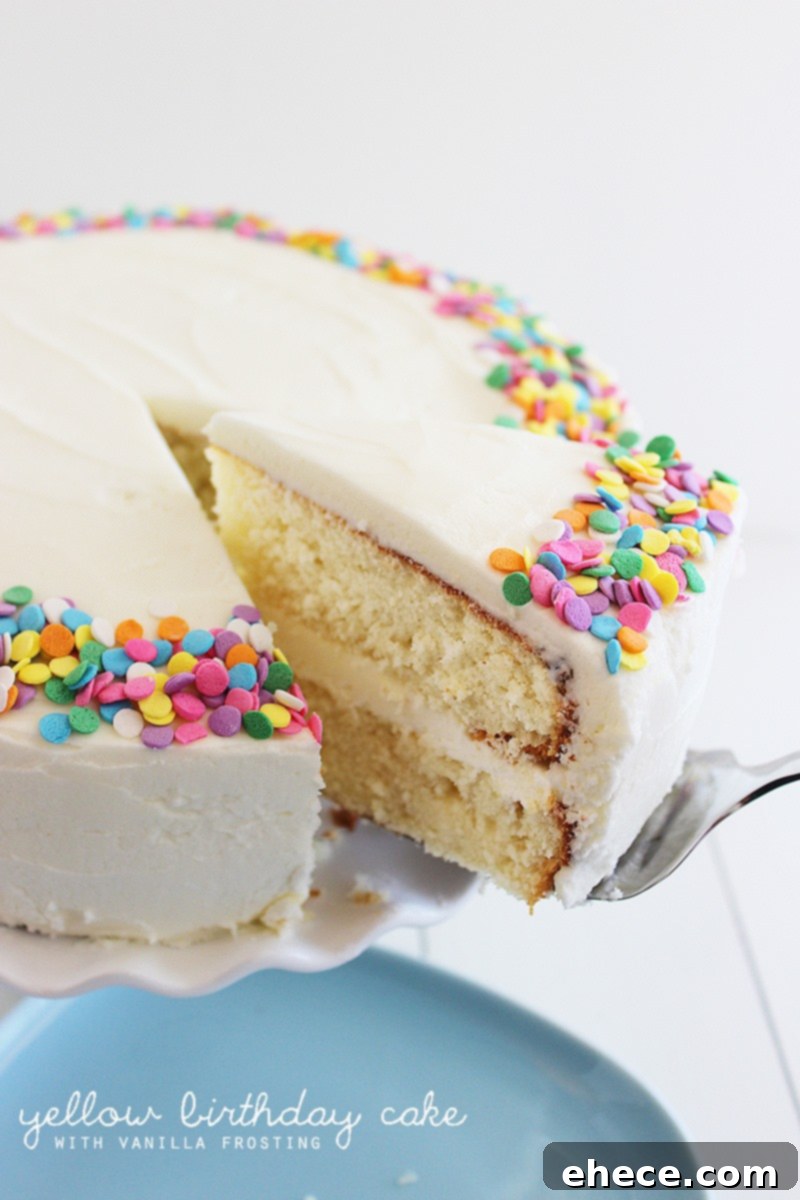
Unveiling the Secret to an Unforgettable Yellow Cake
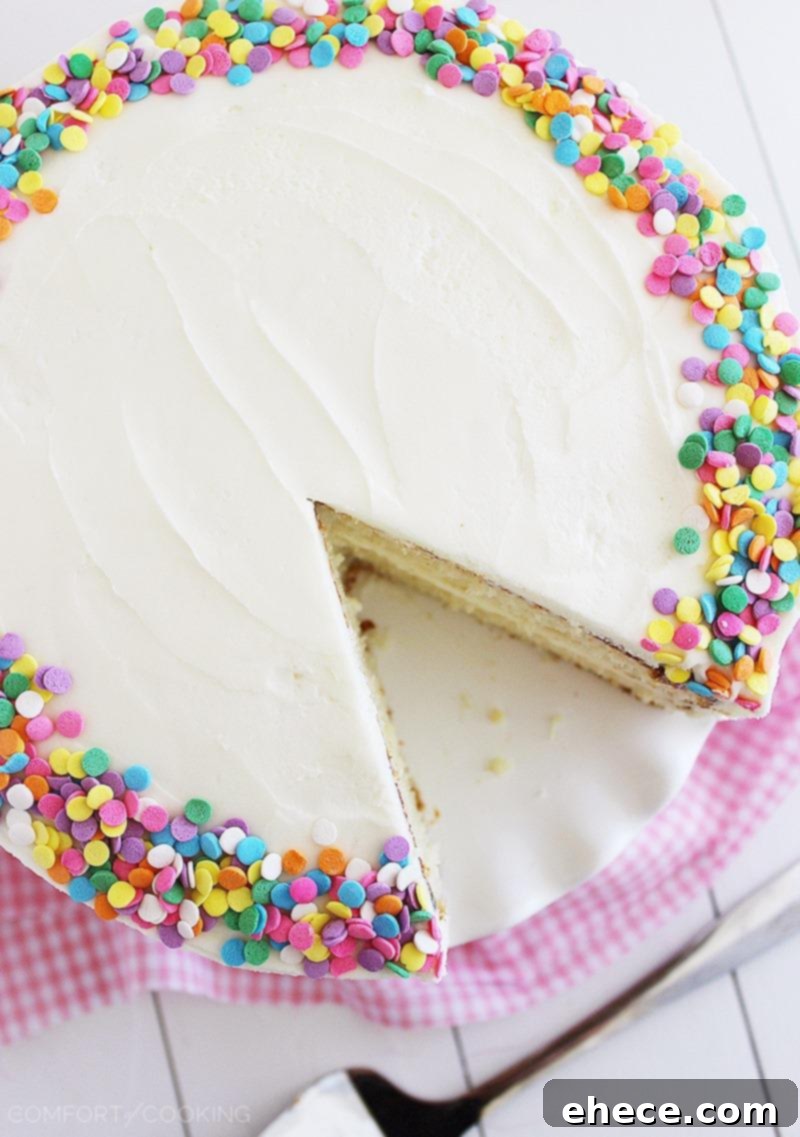
This particular homemade yellow cake transcends expectations. It’s so incredibly moist and wonderfully fluffy that it’s worthy of being the sole centerpiece of any celebration. Every single slice offers a buttery softness that melts in your mouth, bursting with a rich, authentic vanilla flavor. This wasn’t merely the best cake I had ever personally baked; it quickly ascended to the ranks of the best cakes I’ve ever had the pleasure of eating, period. Judging by the enthusiastic kicks and flips from my little one after my celebratory slice, I’d venture to say the baby enjoyed it just as much!
The journey to this perfect cake involved diligent research and a commitment to precision. I gathered invaluable insights, particularly from the wisdom shared by bakers like Mel, whose tips were instrumental. Among the most crucial discoveries was the paramount importance of using room temperature ingredients. This seemingly minor detail truly made all the difference, elevating this cake far beyond my previous attempts. It wasn’t just about technique; it was about patience and understanding the science behind baking. A valuable lesson, indeed, especially with a baby on the way – patience is certainly a skill worth cultivating!
The Science of Softness: Why Room Temperature Matters
You might wonder why bakers constantly stress the importance of using room temperature ingredients. It’s not just a suggestion; it’s a fundamental principle that profoundly impacts the texture and consistency of your finished cake. When butter, eggs, milk, and sour cream are at room temperature, they emulsify much more effectively. Room temperature butter creams beautifully with sugar, trapping air bubbles that create a light, airy structure. Cold butter, on the other hand, resists creaming, leading to a denser cake. Similarly, room temperature eggs and dairy blend seamlessly into the batter, preventing curdling and ensuring a smooth, cohesive mixture. This harmonious blending results in a finer crumb and a wonderfully moist cake that simply can’t be achieved with cold ingredients.
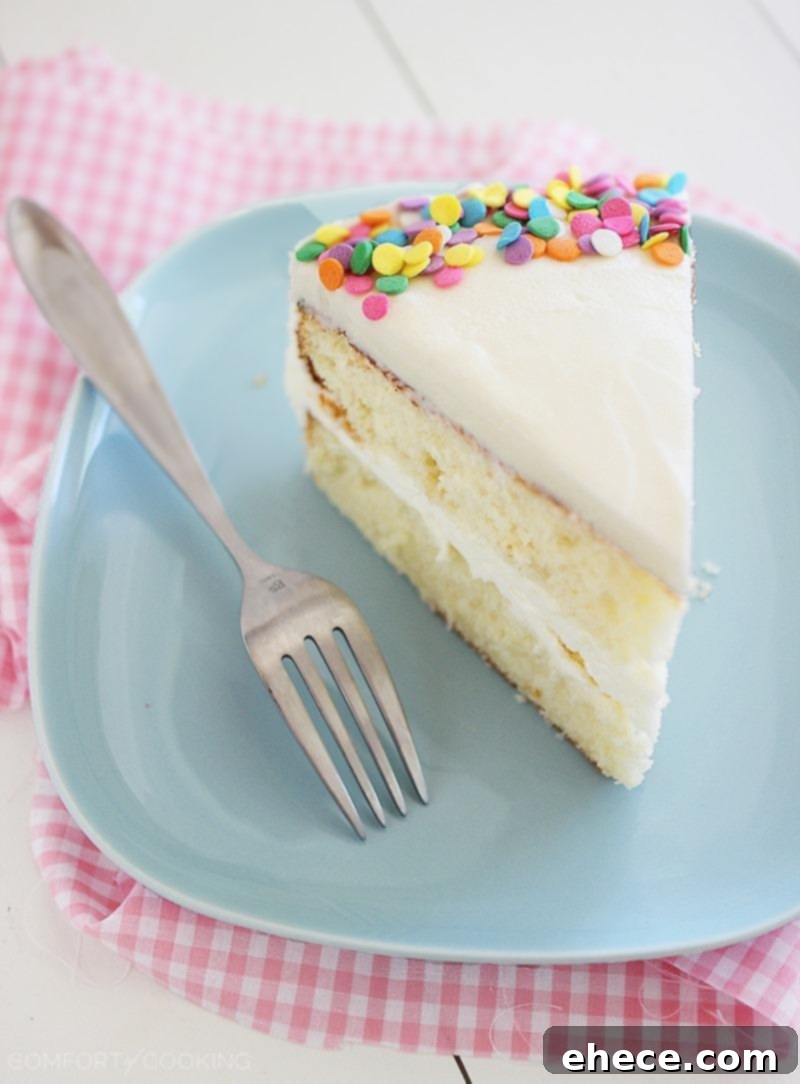
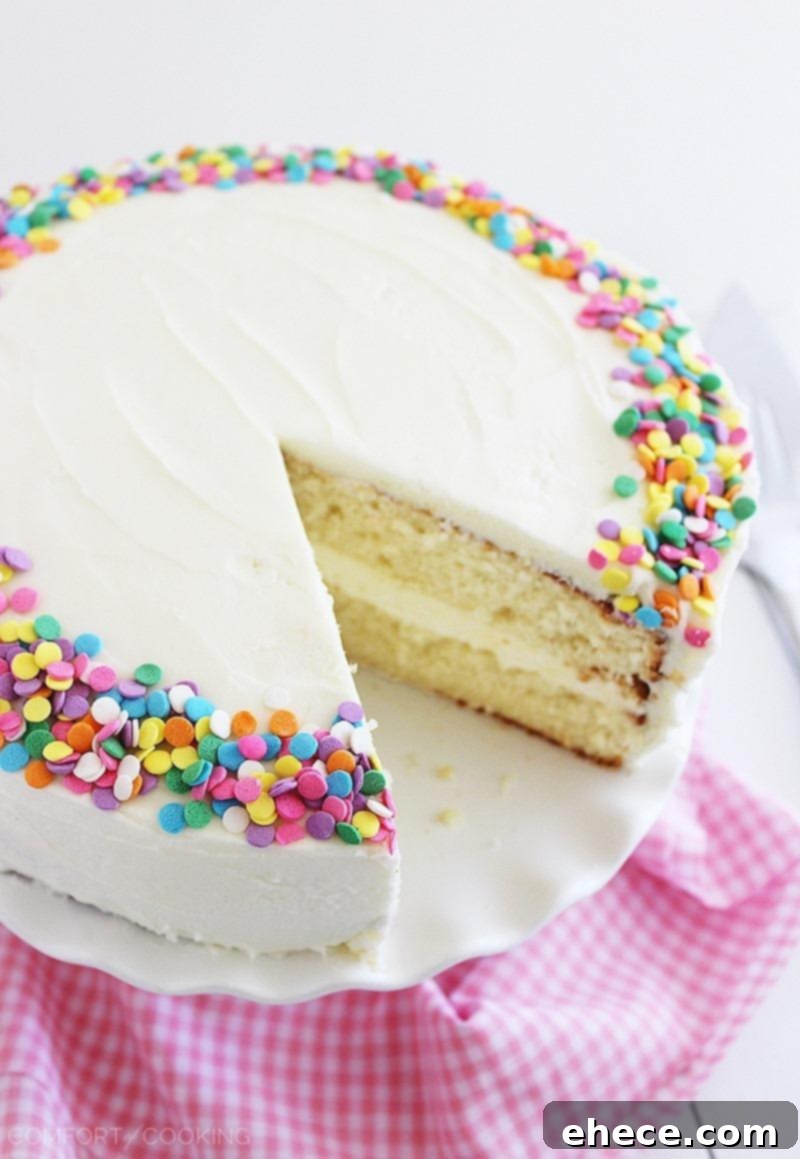
Crafting the Velvety Vanilla Frosting and Final Touches
No truly exceptional cake is complete without an equally exceptional frosting. For this masterpiece, a pure white vanilla frosting, rich and incredibly smooth, was the ideal complement. Paired with generous heaps of vibrant confetti sprinkles, it provided the perfect festive finish to an already fantastic cake. The decorating process itself was a delight. As I used a cake leveler to meticulously trim the tops of the cooled layers, ensuring an extra flat surface for a professional-looking frosting application, the leftover scraps were quickly, and quite eagerly, devoured by eager hands (and perhaps a baking enthusiast!). It’s a testament to the cake’s irresistible quality that even the trimmings disappear in seconds.
This recipe demands a certain level of commitment, but the reward is immeasurable. If you meticulously follow each step, you will be utterly captivated by the heavenly soft, incredibly rich, and perfectly golden yellow cake that emerges from your oven. It’s a moment of pure baking triumph.
Saying Goodbye to Boxed Mixes Forever
For those who have long relied on convenient boxed cake mixes, prepare for a revelation. This homemade yellow cake recipe will convince you to ditch the boxes for good. The depth of flavor, the superior texture, and the sheer satisfaction of creating such a magnificent dessert from scratch are unparalleled. Once you experience the unparalleled taste and quality of this genuine homemade classic, there’s simply no going back. Buh-bye, boxed mix!
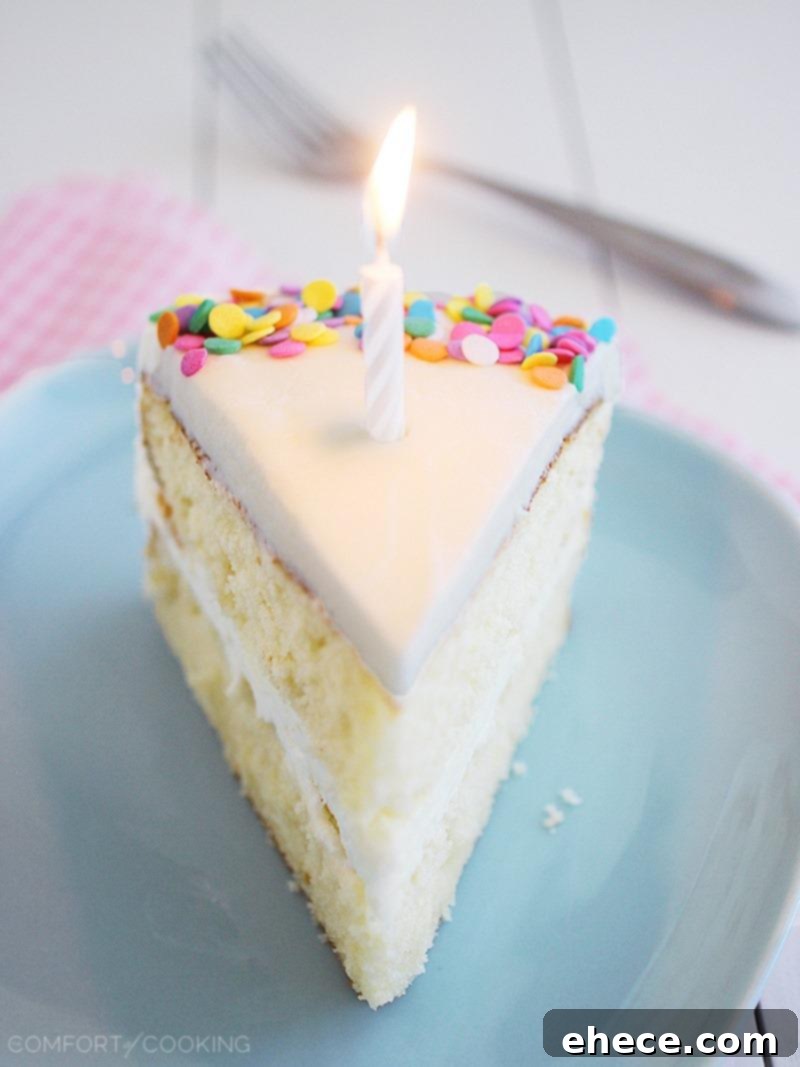
Now, with your perfect cake prepared and adorned, it’s time for the most magical part. Light the candles, gather your loved ones, and make a wish. This cake isn’t just a dessert; it’s a centerpiece for memories, a symbol of love, and a testament to the joy of homemade baking.
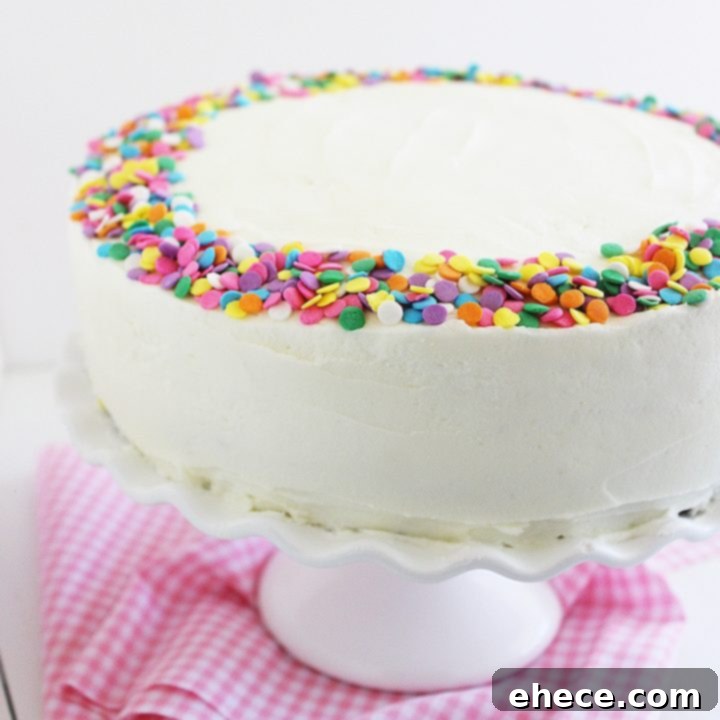
Yellow Birthday Cake with Vanilla Frosting
Yield: 1 (8- or 9-inch) layer cake
Ingredients
For the Yellow Cake:
- 2 1/4 cups cake flour, sifted
- 1 1/2 teaspoons baking powder
- 1/4 teaspoon baking soda
- 1/2 teaspoon salt
- 1 cup (2 sticks) unsalted butter, softened to room temperature
- 1 3/4 cups granulated sugar
- 2 teaspoons pure vanilla extract
- 3 large eggs, at room temperature
- 2 large egg yolks, at room temperature
- 1/2 cup milk (1% or above), at room temperature
- 1/2 cup sour cream (light or regular), at room temperature
For the Vanilla Frosting:
- 1 cup (2 sticks) unsalted butter, softened
- 3-4 cups powdered sugar, sifted
- 2 teaspoons vanilla extract
- 2-3 tablespoons milk, heavy cream, or half-and-half
Instructions
- For the Yellow Cake: Preheat your oven to 350 degrees F (175°C). Position an oven rack in the lower third of the oven for even baking.
- In a large bowl, use a fine mesh strainer to sift together the cake flour, baking powder, baking soda, and salt. Whisk gently to combine thoroughly, then set aside.
- In the large bowl of an electric stand mixer (or using a handheld electric mixer), whip the softened butter on medium speed for 1-2 minutes until light and creamy. Gradually add the granulated sugar and continue beating on medium speed for 4-5 minutes until the mixture is light and fluffy. Mix in the vanilla extract.
- Add the eggs one at a time, followed by the egg yolks, mixing just until each addition is combined before adding the next. Remember to scrape down the sides of the bowl as needed to ensure everything is well incorporated.
- Now, it’s time to alternate wet and dry ingredients. Add one-third of the sifted flour mixture to the batter and mix on low speed just until combined. In a separate small bowl, whisk together the milk and sour cream. Add half of this milk mixture to the batter and mix until incorporated. Continue by adding another one-third of the flour mixture, then the remaining milk mixture, and finally the last one-third of the flour mixture, mixing gently after each addition until just combined. Be careful not to overmix the batter. Give the batter a final gentle stir with a spatula to ensure all ingredients are fully incorporated from the bottom and sides of the bowl.
- Prepare two 8- or 9-inch round cake pans. Grease them thoroughly (nonstick cooking spray works well) and line the bottoms with a round of parchment paper. Grease the parchment paper and the sides of the pans again. If your pans are particularly prone to sticking, a light flouring after greasing can provide extra insurance.
- Divide the batter evenly between the two prepared pans. Gently drop each pan from about 3 inches onto your counter a few times to release any large air bubbles, which helps prevent tunnels in the cake.
- Bake for 25-28 minutes, or until the edges are lightly golden and a toothpick inserted into the center of the cakes comes out with moist crumbs (not wet batter).
- Allow the cakes to cool in their pans for 10 minutes before carefully inverting them onto a wire cooling rack to cool completely. Ensure they are entirely cool before attempting to frost them.
- For the Vanilla Frosting: In the large bowl of an electric stand mixer (or using a handheld electric mixer), add the softened butter. Beat on medium speed for 3 minutes, or until the butter is smooth, creamy, and noticeably lighter in color.
- Gradually add the sifted powdered sugar, about 1/2 cup at a time. After each addition, gradually increase the mixer speed to the highest setting and beat for about 10 seconds. This process helps to aerate the frosting, making it wonderfully light and fluffy. Mix in the vanilla extract.
- Finally, add milk, heavy cream, or half-and-half one tablespoon at a time until the frosting reaches your desired consistency. For a firmer frosting (ideal for piping decorations), add more sifted powdered sugar (1/4 cup at a time). For a softer, more spreadable frosting, add more liquid (1 tablespoon at a time).
- Frost your completely cooled cake as desired. For helpful decorating tips and techniques, many online video tutorials can guide you through the process of layering and smoothing frosting for a professional finish.
- Enjoy your magnificent homemade yellow birthday cake!
Did you make this incredible cake? We’d love to hear about your experience and see your beautiful creations! Share a photo on your favorite social media platform and tag us, or leave a comment on our blog to let us know how it turned out!
© Georgia